
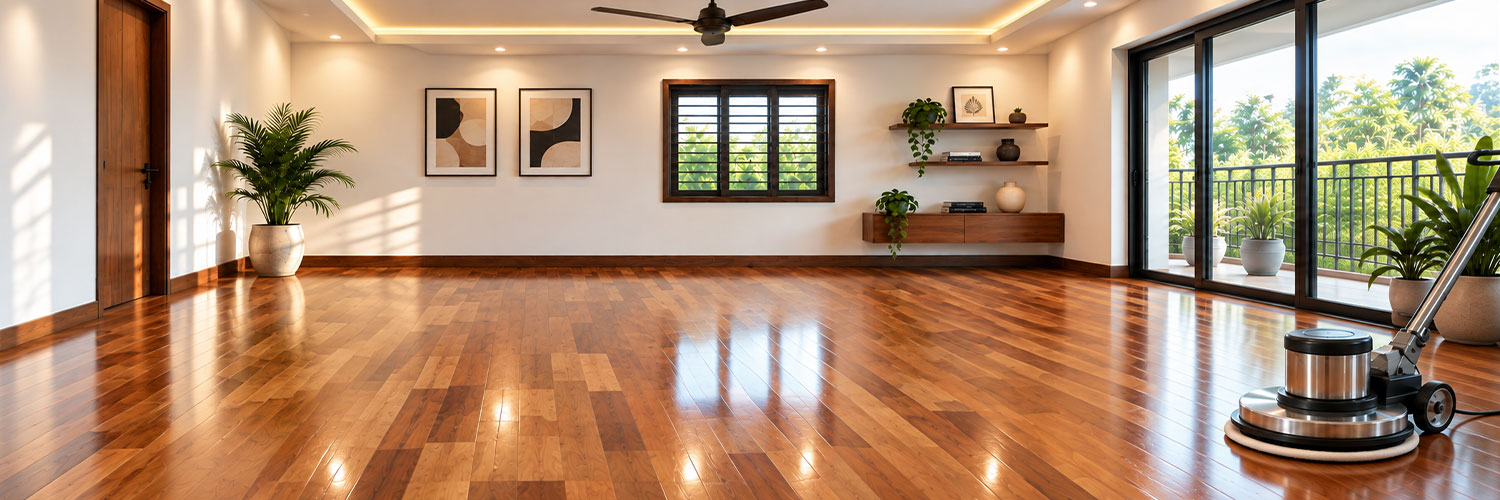
If you are wondering how often solid wood flooring should be refinished, there is no single schedule that applies to every home. The right timing depends on the condition of the finish, foot traffic, pets, furniture movement, cleaning practices, moisture exposure and how the floor has been treated previously. In many cases, a dull surface may only need a maintenance coat, while deep scratches, dents or exposed wood can require full sanding and refinishing.
The important point is to assess the condition of the floor rather than simply follow a fixed number of years.
What Does Solid Wood Floor Refinishing Actually Mean?
Solid wood floor refinishing is the process of restoring a worn wood floor by removing or abrading the existing finish and, where necessary, sanding the wood surface before applying a new protective finish.
However, not every floor that looks dull needs to be sanded back to bare wood.
There are two treatments that homeowners should understand:
- Recoating or maintenance coating: The existing finish is cleaned and lightly abraded before a new coat of compatible finish is applied.
- Full sanding and refinishing: More extensive sanding removes the existing finish and a small amount of wood to address deeper surface damage before a new finish is applied.
The National Wood Flooring Association (NWFA) explains that a maintenance coat can be appropriate when a floor is simply becoming dull, while a complete sand and refinish may be necessary when there are deeper scratches, dents, significant damage or areas where the finish has worn away and bare wood is exposed.
Understanding this difference is important because recoating can preserve the existing floor without the same level of material removal involved in sanding.
How Often Should Solid Wood Flooring Be Refinished?
There is no universal refinishing interval for solid wood flooring.
The NWFA has stated that a new maintenance coat may commonly be considered around every 3 to 5 years, but also notes that individual maintenance schedules vary according to use, wear and lifestyle. This guidance relates to maintenance coating rather than suggesting that every solid wood floor must undergo full sanding and refinishing every 3 to 5 years.
A low-traffic bedroom, for example, may retain its finish for considerably longer than an entrance, hallway or living area that receives heavy daily foot traffic.
The better approach is to inspect the floor regularly and determine whether the problem is:
- Normal surface wear
- Deteriorating finish
- Scratches within the finish
- Damage extending into the wood
- Exposed or severely worn wood
The treatment should match the condition.
What Factors Affect Solid Wood Flooring Refinishing Frequency?
Several factors determine how often to refinish solid wood flooring.
1. Foot Traffic
High traffic areas experience more abrasion than rooms that are rarely used.
Entryways, corridors, living rooms and frequently used dining areas can show finish wear earlier than guest bedrooms or other low use spaces.
Foot traffic does not automatically mean that a floor needs full refinishing. It simply means the protective finish may require attention sooner.
2. Pets
Dogs and cats can contribute to surface wear through claws, dirt and movement across the floor.
Regular nail trimming, keeping entry areas clean and using appropriate mats can help reduce the amount of abrasive material reaching the floor.
3. Children and Daily Activity
Children can increase the amount of movement, spills, dropped objects and furniture movement a floor experiences.
The effect depends on how the room is used rather than simply whether children live in the home.
4. Furniture Movement
Dragging chairs, tables and other furniture can create scratches and dents.
Felt pads under furniture legs can help reduce unnecessary surface damage. Furniture should also be lifted rather than dragged when it needs to be moved.
5. Cleaning Practices
Cleaning correctly can help preserve the protective finish.
The NWFA recommends routine sweeping, dust mopping or vacuuming using an appropriate bare-floor setting. It also advises against excessive moisture and recommends following the flooring or finish manufacturer’s cleaning instructions.
Using unsuitable cleaning products repeatedly can also affect the appearance and performance of a finish.
6. Moisture Exposure
Wood responds to changes in moisture in its environment. Spills should be addressed promptly, while prolonged exposure to standing water can damage the finish and potentially affect the wood itself.
7. Type and Condition of Finish
Different finishes have different maintenance requirements.
A floor finished with a particular oil, wax or surface finish should be maintained according to the manufacturer’s recommendations. Some oil finishes, for example, may have their own periodic maintenance requirements rather than following the same approach as a conventional surface finished floor.
8. Previous Refinishing
Previous sanding matters because every full sanding operation removes some wood.
The remaining thickness, condition and construction of the floor should therefore be assessed before another sanding project is undertaken.
What Are the Signs Solid Wood Flooring Needs Refinishing?
Instead of asking only when should solid wood flooring be refinished, look for visible evidence of finish or wood deterioration.
Common signs include:
- A noticeably dull or worn finish
- Scratches across heavily used areas
- Deep scratches that reach the wood
- Dents or gouges
- Areas where the protective finish has worn away
- Bare wood becoming visible
- Uneven wear between high- and low-traffic areas
- A surface that no longer responds well to normal cleaning
- Visible deterioration around frequently used entrances
- Damage that cannot be addressed with routine maintenance
A dull appearance by itself does not necessarily mean the floor requires full sanding. According to the NWFA, dull floors may often be renewed through recoating, while deeper damage or exposed wood can indicate the need for sanding and refinishing.
Recoating vs Full Refinishing: Which Does Your Floor Need?
| Floor condition | Likely treatment | Why |
| Slightly dull finish | Maintenance coat/recoat | Existing finish may still be serviceable |
| Light surface scratches | Recoat may be sufficient | Damage may be limited to the finish |
| Moderate finish wear | Professional assessment and possible recoat | Condition of existing finish needs checking |
| Deep scratches | Sanding and refinishing | Damage may extend into the wood |
| Significant dents or gouges | Sanding, repair and refinishing | Surface damage requires more extensive treatment |
| Bare wood exposed | Full sanding/refinishing may be required | Protective finish has been lost |
| Damaged or unsuitable boards | Repair/replacement plus refinishing | Localised structural damage may need attention |
This distinction is important because floor recoating is not the same as full refinishing.
A maintenance coat preserves and renews the existing finish. Full refinishing involves more extensive preparation and sanding.
How Many Times Can Solid Wood Flooring Be Refinished?
There is no reliable universal number for how many times solid wood flooring can be refinished.
The number depends on factors including:
- Original floor thickness
- Amount of wood remaining above the fixing system
- Previous sanding history
- Depth of damage being removed
- Floor flatness
- Construction and installation method
- Equipment used
- Skill of the flooring professional
The NWFA specifically notes that the number of times a wood floor can be sanded varies according to the contractor’s skill, equipment, floor thickness or wear layer, flatness and condition.
This is why it is better not to assume that a particular floor can be refinished a fixed number of times.
A professional assessment can determine how much material can safely be removed and whether sanding is appropriate.
Can a Floor Be Recoated Instead of Sanded?
Yes, provided the existing finish and floor condition are suitable.
If the wood itself is in good condition and the problem is mainly a worn or dull protective finish, recoating may be a more appropriate solution than full sanding.
The NWFA describes a maintenance coat as cleaning the existing finish, lightly sanding or abrading it and applying a fresh coat of wood floor finish.
However, recoating is not a way to hide every type of damage. Deep scratches, dents, gouges and exposed wood may require a more extensive process.
How Can You Extend the Time Between Refinishing?
Good floor care can help reduce unnecessary wear and delay major restoration work.
Practical measures include:
- Sweep or dust mop regularly to remove abrasive dirt and grit.
- Vacuum using an appropriate hard-floor or bare-floor setting.
- Clean spills promptly.
- Follow the finish manufacturer’s cleaning recommendations.
- Avoid excessive water when cleaning.
- Avoid steam cleaning unless specifically approved for the flooring and finish.
- Place suitable mats at entrances.
- Use felt pads under furniture.
- Lift furniture instead of dragging it.
- Keep pet nails appropriately trimmed.
- Reduce the amount of dirt and grit brought indoors.
- Maintain a reasonably consistent indoor environment.
- Inspect high traffic areas periodically.
The NWFA also recommends maintaining a consistent indoor environment because wood naturally gains and loses moisture in response to surrounding conditions.
Should You Refinish or Replace Solid Wood Flooring?
The decision should be based on the condition and construction of the floor rather than appearance alone.
Refinishing may be worth considering when:
- The boards are fundamentally sound.
- Damage is primarily surface-related.
- There is sufficient material remaining for safe sanding.
- The floor has extensive finish wear but no major structural problems.
- You want to change or refresh the finish.
Replacement may need consideration when:
- Boards have extensive structural damage.
- Moisture-related problems have caused significant deterioration.
- Boards cannot be adequately repaired.
- The floor no longer has sufficient material for safe sanding.
- Previous sanding or damage has compromised the floor.
A flooring professional should inspect the floor before deciding. The NWFA notes that professional assessment is particularly important because sanding requirements vary according to the floor’s construction, condition and remaining material.
A Practical Way to Decide When to Refinish
Before arranging any work, walk through the space and inspect the floor in good natural light.
Ask:
Is the finish simply dull?
A maintenance coat may be sufficient.
Are scratches visible but limited to the finish?
Recoating may be possible after professional assessment.
Are scratches deep enough to expose or damage the wood?
More extensive sanding may be required.
Are there dents, gouges or damaged boards?
The floor may require repairs followed by refinishing.
Is bare wood visible?
A full sand and refinish may be appropriate.
Has the floor already been sanded several times?
Have its remaining thickness and construction assessed before sanding again.
This condition-first approach is more reliable than simply scheduling refinishing because a certain number of years has passed.
So, how often should solid wood flooring be refinished? The answer depends less on the calendar and more on the condition of the floor.
A dull but otherwise sound finish may only need recoating. Deep scratches, dents, gouges or exposed wood may call for sanding and refinishing. Previous sanding, floor thickness and construction must also be considered before another full restoration is undertaken.
Rather than refinishing simply because a certain number of years has passed, inspect the floor, identify the type of wear and choose the least invasive treatment that properly addresses the problem.
Looking for Professional Guidance?
If you are unsure whether your floor needs a maintenance coat, sanding and refinishing, or a more detailed assessment, Kingsmen Enterprises can help you evaluate the condition of your flooring and determine the appropriate next step. Kingsmen Enterprises provides solid wood flooring solutions and related flooring expertise, with its offerings covering residential and commercial applications. Explore the Kingsmen Enterprises Solid Wood Flooring page to understand the available flooring solutions and discuss your specific requirements with the team.
Frequently Asked Questions
There is no fixed interval for every floor. Maintenance coating may commonly be considered around every 3 to 5 years depending on use, wear and lifestyle, while full sanding and refinishing is generally driven by deeper damage and the condition of the floor.